Workshop Ecotic 2026・speakers
Wednesday April 22nd 2026 @ The University of Tokyo (Hongo Campus) & online
For the fith edition of this workshop we have invited again a unique panel of speakers to discuss the topics of ecotic.
 |
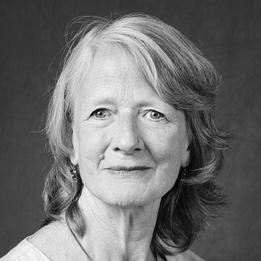
Masahiko INAMI took up his current position as professor at the University of Tokyo after working at the University of Electro-Communications and Keio University. He is currently Special Advisor to the President for The University of Tokyo, Deputy Director and Professor for Advanced Science and Technology. His interests include “JIZAI body editing technology,” the Augmented Human, and entertainment engineering. He has received several awards, including TIME Magazine’s “Coolest Invention of the Year” award and the Young Scientist Award and Research Category Award from the Ministry of Education, Culture, Sports, Science, and Technology (MEXT). He is also a director of the Information Processing Society of Japan and a member of the Science Council of Japan. His latest book is called “Theory of JIZAI Body" (Springer, 2023). |
 |
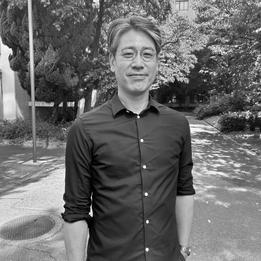
Catherine PELACHAUD is a CNRS Director of Research in the laboratory ISIR, Sorbonne University. Her research interest includes socially interactive agents, nonverbal communication (face, gaze, gesture, and touch), and adaptive mechanisms in human-agent interaction. She has been developing an interactive virtual agent platform, Greta, with her research team, that can display emotional and communicative behaviors. She is co-editor of the ACM handbook on socially interactive agents (2021-22). |
 |
Grant Jun OTSUKI is an associate professor of cultural anthropology at the University of Tokyo, Japan. He has a PhD in anthropology (Toronto), and an MS in STS (RPI). Previously, he held positions at the University of Tsukuba (Japan) and Victoria University of Wellington (Aotearoa New Zealand), and served as an associate editor for Engaging Science, Technology and Society. His work is in the anthropology and history of technology. Grant has written about human-machine interfaces and the history of cybernetics in Japan, postcolonial anthropology, translation, and the anthropology of ethics in Japanese and English. |
 |
Marion LAVAL-JEANTET is a French artist, transcultural psychiatrist, and Professor at University Paris 1 (Panthéon-Sorbonne), she leads the program Art Mondiality and Environment (UMR Acte – CNRS), and holds postgraduate degrees in Art (University Paris 1), Biology, Anthropology and Clinical Psychology (University Paris 8 and 10). She has exhibited her artistic work with Benoit Mangin since 1991 under the pseudonym AOO (Art Object Oriented), while continuing research work in aesthetics, bio-anthropology and transcultural psychiatry (she has been initiated to different shamanistic rituals). |
 |
Jeff LUI is a researcher and entrepreneur based in Tokyo, working at the intersection of artificial intelligence, human behaviour, and responsible innovation. He earned a PhD in Artificial Intelligence and Ethics from Queen’s University (Canada), along with an MBA and is a CPA. He has held senior AI leadership roles at Google and Deloitte, including serving as Director of Artificial Intelligence at Deloitte, where he led applied AI programs spanning computer vision, emotion prediction, and analytics for global partners. At Google, he contributed to large-scale data and machine learning initiatives, bringing an industry-hardened perspective on how AI systems are built, deployed, and governed. His work bridges technical systems and human values, with interests including human-centered AI, deception and trust in intelligent agents, and the ethics of emerging human-machine relationships. |
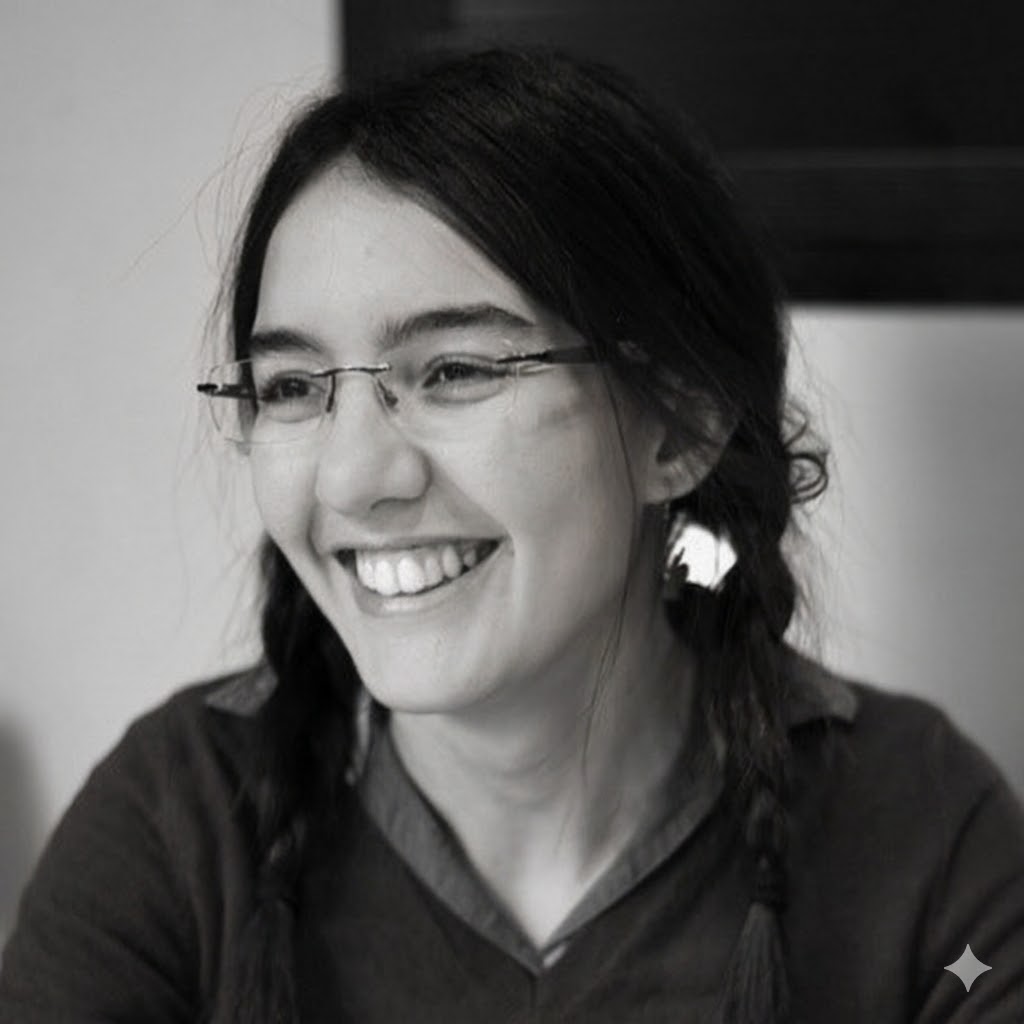 |
Amel ACHOUR-BENALLEGUE is a postdoctoral researcher within the Interverse Research Group at the Research Institute on Human and Societal Augmentation (AIST). She holds a Ph.D. in Cognitive Science and an engineering degree in computer science. In addition to her scientific background, she is an artist, having studied painting at the Fine Arts School in Algeria and completing a master’s degree in Art, Science, and Technology from the Institut Polytechnique de Grenoble in France. Her research spans facial expressions, emotion, wellbeing, movement perception, and multidisciplinary intersections of art, anthropology, philosophy, neuroscience, cognitive psychology, and sensing technology. |
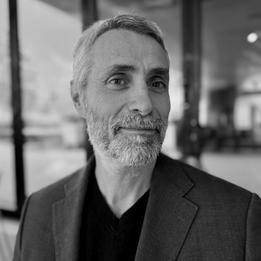 |
Raphael LIOGIER is a professor whose work focuses on the structure of imaginaries, identities and human identity, as well as techno-scientific transitions. He has published around twenty books and founded the Chair of Transitions at UM6P, which is organized around three research axes: (1) cultural and social transitions; (2) techno-scientific transitions and environmental impacts; (3) physical and epistemological transitions. He also leads the innovative Future of Science initiative (future-science.org), as well as the newly established Machine Institute, which is intended to become an experimental center dedicated to the evolving interactions between machine |
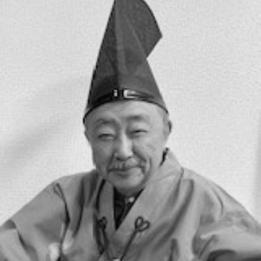 |
Shigeru WATANABE is Professor Emeritus of Psychology at Keio University, where he served as Professor in the Department of Psychology from 1986 to 2012. An internationally renowned scholar in comparative cognition, animal behavior, and the evolution of mind and emotion, he has held numerous visiting appointments at leading institutions worldwide, including the University of Maryland, the University of Cambridge, the University of Vienna, and the École Normale Supérieure. His distinguished career has been recognized with several prestigious awards, including the Ig Nobel Prize in Psychology, the Japanese Psychological Association International Special Award, and the Yamashina Yoshimaro Award for Ornithology. Prof. Watanabe is the author and editor of many influential books in both English and Japanese, with works spanning comparative neuroanatomy, animal emotions, cognition, aesthetics, and the relationship between animals, humans, and machines. |
 |
Sacha RAOULT is an epistemologist and co-founder of the Machine Institute (UM6P, Chair of Transitions), a research laboratory populated by AI agents that experiment on other AI agents and publish their findings. He also works on various tools at the intersection of technology and questions of knowledge, such as this interactive version of the Tractatus Logico-Philosophicus. |
contact us: ecoticonline@gmail.com
 a workshop organized with the support of Kawada Technologies